[Chapter 2] Harrison Expected Eleanor to Come Back Downstairs and Negotiate—Instead, His Own Board Began Asking Why Millions in Sterling Contracts Led to a Company He Secretly Owned With Khloe
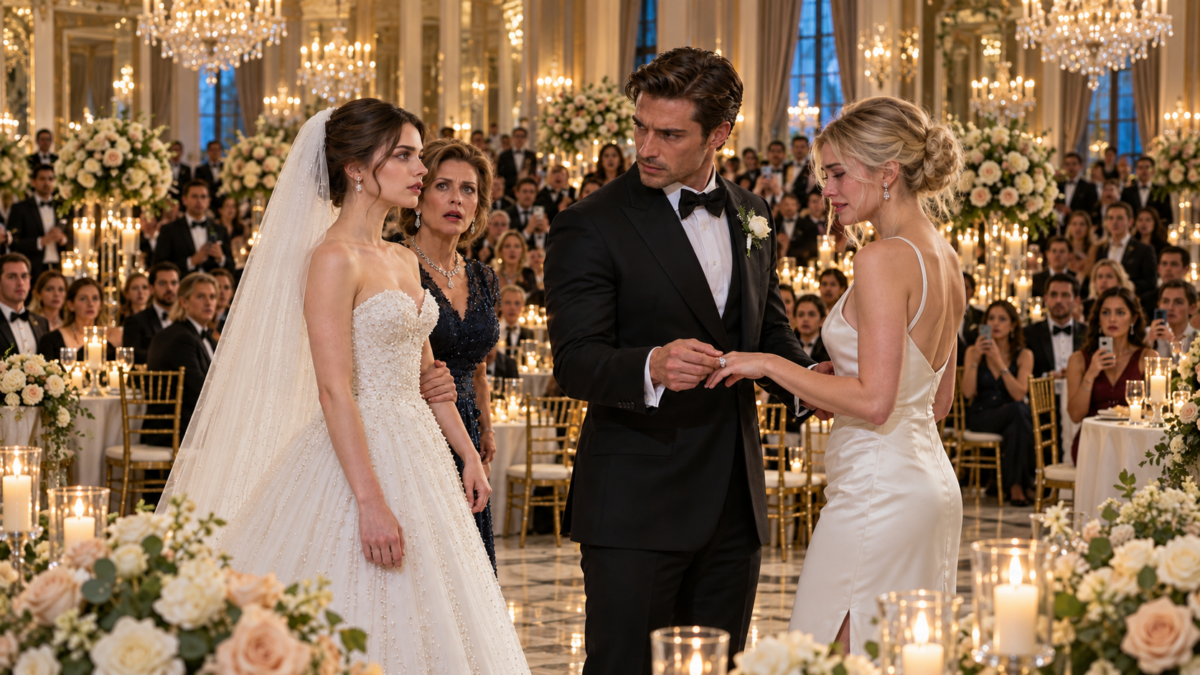
My mother closed the bridal-suite door.
“Tell me everything.”
So I did.
Not the affair.
I did not know whether Harrison and Khloe had been sleeping together.
That question suddenly felt small.
I told her about:
Ashford Strategic Advisory.
The vendor payments.
The proposed Mercer guarantee.
The questions Harrison refused to answer.
And Plan B.
My mother listened without interrupting.
When I finished, she said:
“You knew three months ago.”
“I suspected three months ago.”
“Difference.”
“Yes.”
“Why were you still going to marry him?”
That question hurt.
“Because suspicion is not proof.”
My mother stared at me.
“And love?”
“That too.”
She sat beside me.
“Good.”
I looked at her.
“What?”
“Good that you can admit it.”
Then:
“Do not rewrite yourself into a fool just because somebody else behaved badly.”
I started crying then.
Not loudly.
Not beautifully.
One tear became several.
My mother held my hand.
That was enough.
Downstairs, the reception continued.
Not as planned.
Obviously.
Nobody knew whether to leave.
The Sterling family wanted the ballroom cleared.
My instruction through Beatrice was the opposite.
Do not cancel vendor contracts.
Do not cause unnecessary disruption.
Dinner had been paid for.
Staff had worked all day.
Guests were already present.
Food should be served.
That decision later became famous.
People called it revenge.
It wasn’t.
I simply refused to punish two hundred hotel employees because Harrison humiliated me.
Harrison called seventeen times.
I answered the eighteenth.
“What?”
“Where are you?”
“Upstairs.”
“Come down.”
“No.”
His breathing changed.
“Eleanor, stop behaving like a child.”
I nearly laughed.
“You put my wedding ring on another woman.”
“You forced the issue.”
There it was.
“You really believe that?”
“You refused every compromise.”
“Giving you control of Mercer voting authority was not a marriage compromise.”
“You never trusted me.”
“Tonight was an unusual way to prove I should have.”
Silence.
Then:
“What did you do?”
Interesting.
Not:
Are you alright?
Not:
Can we talk?
What did you do?
“Why?”
“My CFO just called.”
I waited.
“The Mercer guarantee is suspended.”
“Yes.”
His voice hardened.
“You cannot do that because you’re angry.”
“I didn’t.”
“The hold was prepared months ago and activated under an existing governance protocol.”
“You planned this?”
“I prepared for risk.”
“Same thing.”
“No.”
Then:
“Beatrice Lawson will communicate with your board.”
I hung up.
Seven minutes later Khloe called.
I almost ignored it.
Then answered.
“Eleanor.”
She sounded like she had been crying.
“Take the ring off.”
Silence.
“Eleanor—”
“Do whatever you want with Harrison.”
“I mean the ring.”
Another pause.
“I can’t.”
That answer interested me.
“Why?”
“I…”
Then Harrison’s voice appeared faintly in the background.
“Khloe.”
The call ended.
My mother looked at me.
“She’s afraid of him.”
“Maybe.”
“Or acting.”
“Also maybe.”
Important.
Pain does not grant omniscience.
Beatrice arrived twenty minutes later.
No dramatic entrance.
Navy suit.
Laptop.
Two outside attorneys.
She looked at my wedding dress.
Then:
“I’m sorry.”
“Later.”
Good lawyers appreciate clients who postpone emotional collapse until after document review.
She opened the computer.
“Ashford Strategic Advisory has received approximately $18.6 million over eleven months from vendors connected to Sterling Urban.”
My mother inhaled.
“Illegal?”
“Not automatically.”
Beatrice looked at me.
“Disclosure?”
“None that I saw.”
“Correct.”
She continued.
“Harrison owns forty-nine percent indirectly through H.S. Strategic Partners.”
“Khloe owns fifty-one.”
“That explains the ring?”
“No.”
Beatrice shook her head.
“Corporate records explain money.”
“Not people.”
Good.
The larger issue involved project pricing.
Sterling Urban was preparing to acquire distressed properties through a network of entities.
Several were being sold by companies that had hired Ashford Strategic for “market analysis.”
So Khloe’s company could potentially benefit on both sides.
Seller-related fees.
Buyer-related fees.
Meanwhile Harrison was asking Mercer Capital to guarantee acquisition debt.
Possible conflicts.
Possible self-dealing.
Maybe fraud.
Maybe just terrible governance.
The investigation would decide.
Plan B did not declare guilt.
It froze our voluntary participation until questions were answered.
That distinction saved us later.
Then Beatrice showed me something worse.
An email.
Harrison to Khloe.
Three months earlier.
Once the Mercer guarantee is signed, Eleanor can’t unwind this without damaging her own family’s exposure.
I read it twice.
Another:
Wedding first. Closing immediately after. She won’t embarrass both families once we’re married.
My stomach turned.
The submission dates mattered.
Harrison had scheduled the financing close for Monday.
Two days after the wedding.
Marriage was not merely personal to him.
It was leverage.
My mother whispered:
“He thought marrying you would trap Mercer Capital.”
Beatrice corrected gently:
“We still need context.”
I nodded.
But another email provided more.
Khloe:
She keeps asking about Northgate fees.
Harrison:
Let her ask. By Monday it won’t matter.
I closed the laptop.
Enough for tonight.
Not enough for court.
Enough for me.
The red-sealed envelope contained the documents needed to separate my personal future from the corporate issue.
First:
Revocation of the limited proxy Harrison would have received automatically after marriage under an old family-office arrangement.
Because the marriage did not occur, parts were unnecessary.
Second:
Formal notice withdrawing my support from the unclosed Mercer guarantee.
Third:
A signed request for independent related-party review.
Fourth:
A memorandum documenting my concerns and dates, prepared before the wedding.
That last one mattered.
It proved I had not invented corporate accusations because Harrison embarrassed me publicly.
I had raised them privately months earlier.
The humiliation triggered my willingness to stop delaying.
Not the underlying concern.
At 11:40 p.m., Sterling Urban’s independent directors convened by telephone.
Harrison demanded I attend.
I refused.
This was their company.
Their responsibility.
Beatrice attended only to answer questions about Mercer Capital’s position.
By midnight:
No one had been fired.
No bank accounts frozen.
No company seized.
But the acquisition closing was paused.
Outside auditors were engaged.
Document holds expanded.
Harrison and two executives temporarily lost authority to approve transactions involving Ashford Strategic pending review.
Khloe’s consulting contracts were suspended.
The empire was not collapsing.
Not yet.
It was being forced to explain itself.
For powerful people, that can feel remarkably similar.
At 12:17 a.m., Harrison came upstairs.
Hotel security stopped him outside my suite.
He demanded entry.
I went to the door but did not open it.
“Eleanor.”
“Yes?”
“Let me in.”
“No.”
“Don’t make this worse.”
I almost admired the consistency.
“You put my ring on another woman in front of three hundred people.”
“That had nothing to do with business.”
“It had everything to do with control.”
Silence.
Then:
“I wanted you to understand what I need from a wife.”
I leaned my forehead against the door.
“And I finally did.”
“Open the door.”
“No.”
Another silence.
Then his voice softened.
The version that had convinced me for seven years.
“We can fix this.”
I closed my eyes.
“No.”
“You love me.”
“Yes.”
That stopped him.
Because he expected denial.
I continued:
“I loved you this morning.”
“Maybe part of me still does.”
“That doesn’t make marrying you wise.”
He said nothing.
Then:
“Khloe means nothing.”
I laughed once.
Not kindly.
“Then what you did to her is almost as ugly as what you did to me.”
He had no answer.
The next morning, the wedding photographs were everywhere.
Not because we released them.
Guests did.
Harrison placing the ring on Khloe.
My face.
“All right.”
My walk down the aisle.
Social media invented fifty versions.
Some said Khloe was pregnant.
False.
Some said I secretly owned Sterling Urban.
False.
Some said Harrison lost $700 million overnight.
Also false.
Reality was more complicated and therefore less popular.
Khloe asked to meet me.
Beatrice advised:
“Not alone.”
So we met inside a conference room with attorneys.
Khloe still wore the ring.
I stared at it.
She noticed.
“I didn’t know he was going to do that.”
“Did you know the ring size?”
Silence.
That answered enough.
“Did you know he intended to threaten me with marriage to you?”
“No.”
“Did you expect some kind of public declaration?”
“Yes.”
Honesty.
Finally.
She continued:
“He told me he was going to acknowledge that we belonged together.”
“And you attended my wedding in white.”
Tears entered her eyes.
“I know how that looks.”
“It looks exactly how it was.”
Fair.
Then:
“Did you know about Ashford Strategic?”
Her expression changed.
“Yes.”
“Did you know Harrison owned part?”
“Yes.”
“Did you disclose that to Sterling’s board?”
“Harrison said legal knew.”
“Did you know legal knew?”
“No.”
“Did you receive eighteen million dollars in fees?”
“Company revenue.”
“Answer.”
“Yes.”
“Did you perform work?”
“Yes.”
That mattered.
Not every payment was fictional.
Khloe had analysts.
Reports.
Legitimate consulting.
But legitimate work does not erase undisclosed conflicts.
“Why?”
I asked.
“Why hide Harrison’s interest?”
Khloe stared at the table.
“He said if the board knew, they’d treat me like a girlfriend getting favors.”
“And were you?”
Her eyes snapped up.
“No.”
“Then disclosure would have protected you.”
She started crying.
That was when I understood something.
Harrison had manipulated both of us differently.
With me:
Love meant surrender control.
With Khloe:
Love meant secrecy was necessary because nobody else would respect her.
Same mechanism.
Different packaging.
That did not make her innocent of every choice.
She accepted my ring.
She participated in hidden business arrangements.
She let Harrison humiliate me publicly.
But villain and victim are not mutually exclusive categories.
People can be both harmed and responsible.
Khloe eventually removed the ring.
Not during our meeting.
Not for me.
Two days later, her attorney delivered it to Beatrice in an evidence envelope because the engraving mattered to the public-wedding dispute and related civil issues.
I did not put it back on.
I never touched it again.
The independent review lasted four months.
Findings were ugly.
Ashford Strategic had performed some legitimate work.
But several fees were inflated.
Related-party interests had not been properly disclosed.
Project models had been manipulated to make certain acquisitions appear more profitable.
Harrison had pressured finance staff to accelerate approvals.
One executive refused.
He was reassigned.
Another raised questions.
His bonus disappeared.
Then investigators found potential false representations to lenders.
That crossed from governance into possible fraud.
Relevant authorities were notified.
Not by me.
By counsel following legal obligations.
Harrison was placed on leave.
His father stepped down temporarily from the board chairmanship because evidence showed he had ignored earlier conflict warnings.
Khloe cooperated.
Her cooperation did not erase her responsibility.
But it helped reconstruct the transactions.
Sterling Urban did not disappear.
Thousands of employees had done nothing wrong.
Projects continued under interim leadership.
The Monday acquisition failed.
Probably for the best.
Then Harrison asked to see me one final time.
I agreed.
Public place.
Lawyers nearby.
No wedding suit now.
No ballroom.
He looked tired.
“Was any of it real?”
He asked.
I knew what he meant.
“Seven years?”
“Yes.”
“For me.”
His face tightened.
“For me too.”
“Then why did you do it?”
He looked out the window.
“Because you were leaving me behind.”
“What?”
“You had Mercer.”
“Your own career.”
“Your own board.”
“You never needed me.”
There it was.
Not love.
Need.
Harrison wanted a marriage in which being indispensable gave him safety.
My independence felt like rejection.
“So you tried to make me smaller.”
He looked down.
“Yes.”
The honesty almost hurt more.
Then:
“And Khloe?”
“She always made me feel needed.”
I nodded.
That explained the triangle.
Did not excuse it.
“You ruined me.”
He said.
“No.”
His eyes rose.
“I stopped shielding you from review.”
“Your own emails did the rest.”
He laughed bitterly.
“Same Eleanor.”
“No.”
I stood.
“The old Eleanor would have stayed because she loved you.”
He stared.
“What changed?”
I thought about the aisle.
The ring.
My mother’s hand.
Then:
“You made the decision visible.”
And I left.